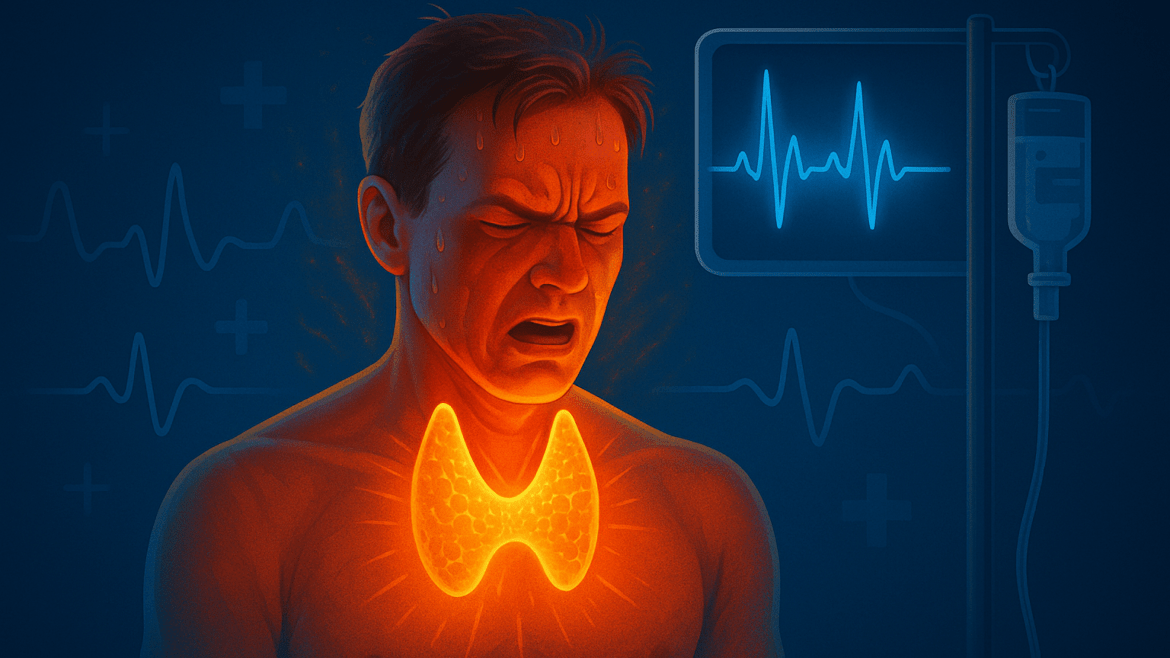
A thyroid crisis does not wait politely for a doctor’s office to open. It can turn a racing heartbeat, fever, confusion, and severe weakness into a life-threatening emergency within hours. Thyroid Storm Symptoms matter because they often look like panic, infection, dehydration, or heart trouble at first, which is exactly why people lose precious time. In the United States, where many adults manage Graves’ disease, hyperthyroidism, or thyroid medication changes through outpatient care, the danger often starts when symptoms suddenly stop acting “routine.” Thyroid storm is rare, but major medical sources describe it as a medical emergency that needs hospital treatment, often with high fever and rapid heart rate at the center of the picture.
Nobody should try to “sleep off” a possible thyroid storm. A high fever with a pounding pulse, agitation, vomiting, diarrhea, chest pressure, or mental changes belongs in emergency care, not a waiting-room debate. For readers tracking serious health risks and emergency health resources, patient safety awareness becomes more than a search topic. It becomes the difference between acting early and acting too late.
Why Thyroid Storm Symptoms Demand Fast Emergency Action
Thyroid storm is the body’s alarm system stuck at full volume. The thyroid hormones that normally help regulate energy, heart rate, heat, and digestion become part of a dangerous chain reaction. The result is not “bad thyroid symptoms.” It is a whole-body crisis that can affect the heart, brain, liver, gut, and breathing at the same time. The American Thyroid Association describes thyroid storm as the most severe form of hyperthyroidism and notes that it can lead to organ failure and death rates reported between 8% and 25%.
When severe hyperthyroidism signs stop looking ordinary
Mild overactive thyroid symptoms can be easy to explain away. You may feel nervous, sweaty, shaky, hungry, tired, or unable to sleep. Many Americans keep working through those signs because they resemble stress, too much coffee, hot weather, or a rough week.
The shift becomes dangerous when severe hyperthyroidism signs stack together and intensify. A person may go from “my heart feels fast” to a pulse that feels out of control. Heat intolerance can become fever. Restlessness can turn into agitation, confusion, or strange behavior that family members notice before the patient does.
That last part matters. A person in thyroid storm may not judge their own condition clearly. Confusion, delirium, and altered consciousness are recognized warning signs, and Merck notes that thyroid storm can include fever, extreme weakness, restlessness, mood changes, confusion, and even coma.
Why waiting at home can become the worst decision
Emergency thyroid care exists because thyroid storm moves faster than normal clinic care. Blood tests help doctors confirm thyroid problems, but treatment often starts based on the clinical picture because delay can be dangerous. This is one of those medical situations where the pattern matters as much as the lab number.
A real-world example is the person with Graves’ disease who stops medication for a few days, develops a respiratory infection, then spends the night sweating through sheets with a racing heart. By morning, they may be vomiting, shaking, and unable to think clearly. That is not a “call tomorrow” problem.
The counterintuitive point is that the thyroid gland is not always the loudest clue. The heart, brain, and temperature may tell the story first. If those systems are failing together, the safest move is calling 911 or going to the nearest emergency department.
Fever, Heart Racing, and Heat That Feel Out of Control
Body heat and heart speed are two of the clearest danger signals in thyroid storm. A fever alone can come from the flu, COVID, a urinary infection, or many other causes. A fast heartbeat alone can come from anxiety, dehydration, anemia, or stimulant use. Together, especially in someone with known or possible hyperthyroidism, they deserve a much sharper response.
How rapid heart rate fever changes the risk level
A pulse that stays fast while you are resting is not the same as a pulse that rises during exercise. Thyroid storm can push the heart into dangerous speed because thyroid hormone makes the body more sensitive to stress signals. Cleveland Clinic lists high fever and rapid heart rate as common symptoms and describes thyroid storm as a hospital-treated medical emergency.
The phrase rapid heart rate fever may sound simple, but the combination carries weight. A person may feel pounding in the chest, shortness of breath, chest tightness, dizziness, or a sense that the heart is skipping. Older adults may not describe panic or shakiness at all. They may only look weak, sweaty, confused, or unusually tired.
That quiet version can fool families. An older parent sitting in a chair, breathing fast, and saying little may be in more danger than a younger person pacing the room. Thyroid storm does not always announce itself with drama.
Why sweating, shaking, and heat intolerance can mislead you
Sweating and tremors often get dismissed because they seem less frightening than chest pain. In thyroid storm, they are part of a larger heat-and-metabolism surge. The body is burning energy too fast, and the person may become dehydrated while still drinking fluids.
A summer day in Phoenix or Houston can make this harder to spot. Someone with untreated hyperthyroidism may blame the weather, then miss the fact that everyone else in the house feels fine. That mismatch is a clue. If the room is comfortable but the person is drenched, shaky, flushed, and feverish, the problem may be internal.
A second use of rapid heart rate fever belongs here because families often search exactly that phrase when they are scared. The plain answer is this: when fast pulse and fever come with confusion, vomiting, chest symptoms, faintness, or known thyroid disease, emergency care is the right place.
Brain, Gut, and Breathing Clues People Often Miss
The heart and fever get attention first, but thyroid storm often spreads its warning signs across systems. That is why it can be mistaken for food poisoning, a panic attack, sepsis, heat illness, or drug reaction. The danger lies in treating one symptom while missing the pattern.
Why confusion can be more serious than pain
Mental changes should never be treated as a side note. Agitation, delirium, severe anxiety, strange speech, disorientation, or unusual sleepiness can mean the brain is under stress. StatPearls describes thyroid storm as an acute, life-threatening complication of hyperthyroidism with multi-system involvement, not a single-organ thyroid complaint.
The family member who says, “She is not acting like herself,” may be giving the most useful history in the room. A patient may deny danger because they feel wired, frightened, or detached from what is happening. That is one reason emergency teams listen closely to relatives, caregivers, and friends.
There is a hard truth here: pain is not required for danger. A person can be close to collapse without screaming, clutching the chest, or saying the “right” words. Confusion paired with severe hyperthyroidism signs should push the situation into emergency territory.
How vomiting, diarrhea, and breathing trouble fit the pattern
Gut symptoms can pull attention in the wrong direction. Nausea, vomiting, diarrhea, and abdominal pain may look like a stomach bug. In thyroid storm, they can reflect the body’s overactive state and rising stress on organs. Medscape’s thyroid storm overview lists gastrointestinal symptoms such as nausea, vomiting, diarrhea, abdominal pain, and jaundice among possible signs.
Breathing trouble raises the risk further. A person may breathe fast because of fever, heart strain, anxiety, or fluid stress. If they cannot speak in full sentences, look bluish, feel faint, or have chest pain, the safest assumption is that emergency care cannot wait.
A practical home rule helps: one severe symptom can be watched only when a doctor has given clear guidance. Several severe symptoms together should not be managed at home. Fever, fast pulse, confusion, vomiting, and breathing trouble are a dangerous cluster.
Who Faces Higher Risk and What Triggers a Crisis
Thyroid storm usually does not appear out of nowhere. It often happens when an overactive thyroid meets a major physical stress. That stress may be infection, surgery, trauma, childbirth, missed medication, iodine exposure, or another acute illness. The trigger matters, but it should never distract from the emergency in front of you.
Why Graves disease emergency risk deserves respect
Graves’ disease is one of the best-known causes of hyperthyroidism in the United States. Many people live well with it once they receive the right treatment. The risk rises when thyroid hormone levels remain uncontrolled, treatment is stopped, or the body faces another shock.
A Graves disease emergency may begin during something that looks unrelated. A person may have pneumonia, a dental infection, a car accident, or a planned surgery. The thyroid problem then magnifies the body’s stress response, and the emergency becomes larger than the original trigger.
The American Thyroid Association notes that thyroid storm occurs mostly in people with hyperthyroidism such as Graves’ disease and often follows stress from surgery, infection, injury, or iodine-containing medications. That is why a patient’s thyroid history matters in the ER, even if they came in for fever or vomiting.
Medication gaps and hidden thyroid history can raise the stakes
Missed antithyroid medicine can become dangerous faster than people expect. This does not mean every missed dose causes a crisis. It means repeated missed doses, untreated disease, or medication changes during illness deserve serious attention.
The trickier case is the person who does not know they have hyperthyroidism. They may have months of weight loss, heat intolerance, tremor, poor sleep, and bowel changes, then suddenly crash during an infection. The storm gets recognized only after the emergency begins.
A second Graves disease emergency warning belongs to families who already know the diagnosis. Keep medication lists current. Tell emergency staff about thyroid disease, antithyroid drugs, recent radioactive iodine treatment, thyroid surgery, pregnancy, iodine contrast scans, or supplement use. Small details can help doctors move faster.
What Emergency Thyroid Care Usually Means in the Hospital
Emergency care for suspected thyroid storm is not about one magic pill. Doctors usually work on several problems at once: cooling the body, slowing the heart, blocking thyroid hormone production and effects, giving fluids, treating the trigger, and watching for organ strain. Patients may need ICU-level monitoring when the heart, blood pressure, breathing, or mental state is unstable.
Why emergency thyroid care starts before everything is confirmed
A thyroid storm diagnosis often depends on symptoms, vital signs, medical history, and lab testing together. Doctors may order thyroid function tests, electrolytes, liver tests, heart monitoring, infection testing, and imaging when needed. Still, they may not wait for every result before acting.
That approach can feel unsettling to families who want certainty first. Emergency medicine often works the other way around. When the risk of waiting is higher than the risk of early treatment, doctors move while the evidence is still being gathered.
Medscape states that patients with thyroid storm should be treated in an ICU setting for close monitoring and access to advanced support when needed. That level of care is not overreaction. It matches the speed and reach of the condition.
What families should say when calling 911 or arriving at the ER
Clear words save time. Say, “This person may have thyroid storm,” then list the symptoms: fever, fast pulse, confusion, vomiting, diarrhea, chest pain, shortness of breath, fainting, or known hyperthyroidism. Mention Graves’ disease, missed thyroid medication, recent infection, surgery, childbirth, iodine contrast, or recent thyroid treatment.
Bring medication bottles or a phone photo of the labels. Include antithyroid medicines, beta blockers, thyroid hormone pills, supplements, decongestants, and heart medicines. Emergency teams do not need a perfect story. They need enough clues to connect the pattern.
The final useful point is emotional, not technical. Do not argue yourself into staying home because you fear being wrong. Emergency departments would rather rule out thyroid storm than meet it too late.
Acting Early Can Save a Life
Thyroid storm is rare, but rare does not mean harmless. The safest mindset is simple: when an overactive thyroid history meets fever, racing heart, confusion, severe weakness, vomiting, diarrhea, chest symptoms, or breathing trouble, the situation belongs in emergency care. Thyroid Storm Symptoms are not a checklist to finish at home. They are warning lights that tell you the body may be losing control of temperature, rhythm, and organ stress at the same time.
The stronger choice is also the calmer choice. Call 911 in the United States when symptoms are severe, sudden, or paired with mental changes. Bring the thyroid history forward early, even if the visit started with fever or stomach symptoms. Nobody wins by waiting for a crisis to look textbook. If your body is sending the kind of signals that make people around you scared, trust that fear and get medical help now.
Frequently Asked Questions
What are the first warning signs of thyroid storm?
Early warning signs often include fever, a racing heartbeat, heavy sweating, shaking, agitation, vomiting, diarrhea, and severe weakness. The danger rises when symptoms appear together or worsen fast, especially in someone with hyperthyroidism or Graves’ disease.
When should I call 911 for suspected thyroid storm?
Call 911 if fever and fast heartbeat come with confusion, chest pain, fainting, breathing trouble, severe weakness, or repeated vomiting. Do not drive yourself if you feel faint, disoriented, or too weak to stay alert.
Can thyroid storm feel like a panic attack?
Yes, it can feel like panic because it may cause racing heart, sweating, shaking, and intense anxiety. Fever, vomiting, diarrhea, confusion, or known thyroid disease should shift concern away from ordinary anxiety and toward emergency evaluation.
What causes thyroid storm in people with Graves’ disease?
Common triggers include untreated hyperthyroidism, missed antithyroid medication, infection, surgery, injury, childbirth, or iodine exposure. Graves’ disease raises risk when thyroid hormone levels are not controlled or the body faces major stress.
Is thyroid storm always linked to high fever?
High fever is common, but symptoms can vary. A person may also have rapid heartbeat, confusion, agitation, severe weakness, vomiting, diarrhea, jaundice, or breathing trouble. Older adults may show less dramatic symptoms but still be seriously ill.
Can untreated hyperthyroidism become a medical emergency?
Untreated hyperthyroidism can become dangerous when thyroid hormone effects overwhelm the body. Most people do not develop thyroid storm, but the risk rises when symptoms worsen sharply or another illness stresses the body.
What happens in the hospital during emergency thyroid care?
Doctors monitor the heart, temperature, blood pressure, breathing, fluids, and organ function. Treatment may include medicines to slow the heart, block thyroid hormone activity, control fever, replace fluids, and treat the trigger such as infection.
How can someone lower the risk of thyroid storm?
Take thyroid medicine exactly as prescribed, keep endocrinology appointments, monitor symptoms, and seek care early during infections or medication problems. People with Graves’ disease should tell every doctor about their thyroid history before surgery, scans, or new medications.